No More Middlemen: What Audiences Actually Expect When They Have Direct Access to Creators
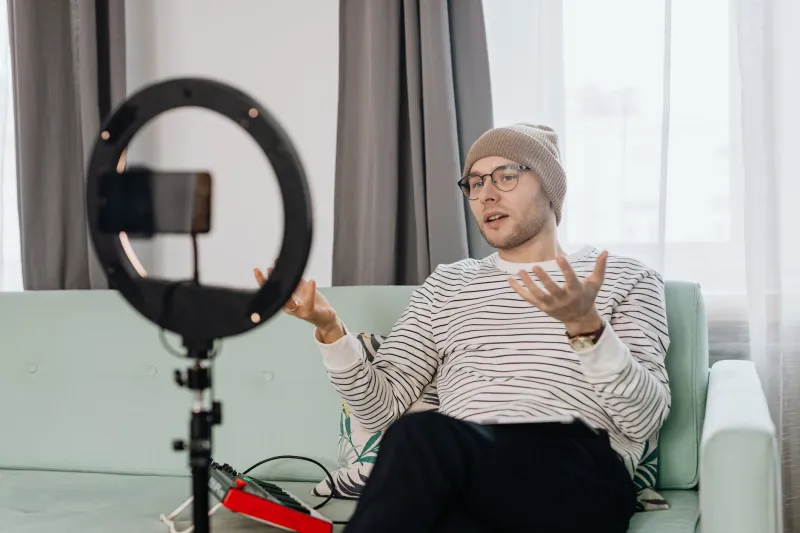
Not that long ago, if you wanted to be a working entertainer with a real audience, you needed someone to let you in. A label. A network. A studio. A publisher. These institutions weren't just distribution channels—they were arbiters of legitimacy. If they said you were worth paying attention to, audiences had reason to believe it. If they passed on you, your path to those audiences was narrow and difficult.
That model isn't dead, but it's been fundamentally disrupted. And the creators who are thriving right now are the ones who understand what that disruption actually means—not just for distribution, but for the entire relationship between creator and audience.
The Gatekeeper Wasn't Just a Bouncer
Here's something worth understanding about what traditional gatekeepers actually provided beyond access. They offered curation. When a major label signed an artist or a major network greenlit a show, they were making a bet—and audiences knew it. That bet implied a certain level of vetting, production quality, and commercial viability. It was a signal.
When you remove that signal, something has to replace it. In the absence of institutional endorsement, audiences have to develop their own filters. And they have. Recommendation algorithms, creator communities, word-of-mouth within niche interest groups, Substack newsletters, podcast ecosystems—all of these are functioning as informal gatekeeping systems. They're just decentralized, and they're driven by different values than the old institutional ones.
The implication for creators is significant. You're no longer trying to convince a gatekeeper to vouch for you. You're trying to convince an audience directly—and that requires a fundamentally different kind of engagement.
What 'Authenticity' Really Means Now
Authenticity is probably the most overused word in the current conversation about creator culture, and it's gotten so vague that it's almost meaningless. Every brand claims to be authentic. Every content strategy deck includes the word. It's become a performance of its own.
But underneath the buzzword, there's something real worth paying attention to. When audiences have direct access to creators—when they can see your posts, your stories, your responses to comments, your live streams, your off-the-cuff takes—they develop a fairly sophisticated sense of whether the version of you they're seeing is genuine. Not perfect. Not polished. Genuine.
The creators who get this right aren't necessarily the ones who share the most or who perform vulnerability most dramatically. They're the ones whose public presence feels continuous with their actual work and values. There's consistency between what they say they care about and what they spend their energy on. That consistency is what audiences are actually responding to when they say they trust a creator.
The ones who get it wrong are usually trying to engineer authenticity—studying what resonates and reverse-engineering a persona that hits those notes. Audiences are surprisingly good at detecting that, especially over time. And when they detect it, the relationship breaks in a way that's hard to repair.
Direct Access Creates Direct Expectations
Here's the trade-off that doesn't get talked about enough. When you build a direct relationship with an audience, you're implicitly making a contract. Not a legal one—but a relational one. They've given you their attention, often their money, sometimes their loyalty. In return, they expect something.
What they expect has shifted. It used to be enough to deliver the work—the album, the film, the performance. The audience's relationship was with the product, not the person. Now, for many creators, the relationship is with the person. The work is part of it, but so is the ongoing presence, the communication, the sense that the audience is seen and valued.
This is genuinely demanding. It requires a level of sustained engagement that wasn't part of the job description for previous generations of entertainers. And it creates a real tension: the more direct the relationship, the more audience expectations can start to feel like obligations that compete with the actual creative work.
The creators who manage this well tend to be very clear—with themselves and their audiences—about what the relationship actually is. They set expectations explicitly rather than letting them drift. They communicate when they're stepping back. They're honest about the limits of how much access they can sustainably provide.
Algorithm vs. Relationship: The False Choice
A lot of the conversation about creator success right now is framed around gaming the algorithm—figuring out the right posting cadence, the right format, the right hooks to trigger platform distribution. And there's real tactical value in understanding how platforms work.
But the creators with the most durable audiences aren't primarily algorithm-optimizers. They're relationship-builders. The algorithm can get you discovered. It cannot make anyone care about you once they arrive. That part is still entirely human.
The most sustainable version of a direct audience relationship is one where a meaningful portion of your audience would follow you off the platform if the platform disappeared. They're not there because the algorithm served you up—they're there because they've decided you're worth their time regardless of where you show up. Building that kind of loyalty takes longer than optimizing for reach, but it compounds in ways that algorithmic success doesn't.
What This Means for Working Creators
If you're navigating this landscape right now, the practical implication is this: stop thinking about your audience as a metric and start thinking about them as a community with a genuine relationship to your work. That means communicating like a person, not a brand. It means being honest about what you're working on and why, including when things aren't going the way you hoped. It means showing up consistently enough that the relationship feels real, without burning yourself out trying to be everywhere at once.
The gatekeepers being gone is mostly good news for creators who have something real to offer. The bar to entry is lower. The path to a viable audience is more direct. But the responsibility that comes with that access is real—and the creators who treat it seriously are the ones building something that lasts.