Who Decides What Wins: The Slow Collapse of Entertainment's Old Guard
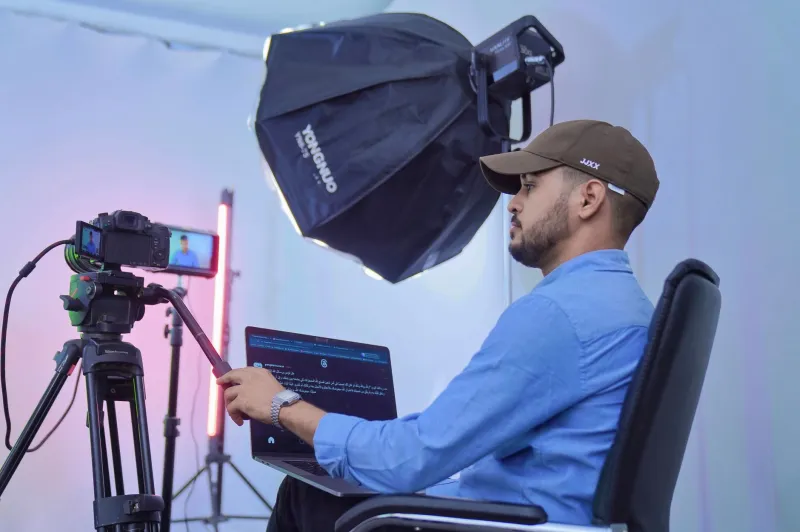
There's a version of Hollywood — and Nashville, and New York publishing — that most people still picture when they think about "making it" in entertainment. Corner offices. Development deals. A phone call from someone important that changes everything. That version still exists, technically. But it's running on borrowed time, and the people doing the most interesting work in media right now mostly aren't waiting for that phone call anymore.
The gatekeepers are losing their grip. And honestly? It's been a long time coming.
How the Old System Actually Worked
For most of the 20th century, the logic was simple and brutal: the people with distribution controlled everything. If a major label didn't press your record, it didn't get heard. If a network didn't greenlight your show, it didn't get made. If a publisher didn't acquire your book, it didn't reach shelves. The infrastructure required to reach an audience was so expensive and so centralized that creative talent had no real leverage. You either played the game on their terms or you didn't play at all.
This wasn't just about money, either. It was about taste, access, and permission. The gatekeepers decided what was too niche, too weird, too risky, or too unconventional. Entire genres got suppressed. Entire demographics got ignored. The system was efficient at producing hits that appealed to the broadest possible audience — and genuinely terrible at everything else.
The internet didn't just create new platforms. It made that entire infrastructure optional.
The Bypass Artists
Look at what's happened over the last decade and the case studies are everywhere.
Take the podcasting world. Joe Rogan didn't launch The Joe Rogan Experience because a radio conglomerate believed in his vision. He started recording conversations in his garage, built an audience over years, and eventually landed a deal with Spotify reportedly worth over $200 million — on his own terms, after proving the concept himself. The traditional media industry didn't discover him. He made himself impossible to ignore.
Or look at what's happened in fiction publishing. Authors like Brandon Sanderson — who already had a traditional publishing base — ran a Kickstarter in 2022 that raised over $41 million from readers who wanted to fund his work directly. That's not a publishing house deciding what gets made. That's an audience voting with their wallets, cutting out the middleman entirely.
In music, artists like Chance the Rapper built careers releasing free mixtapes online and leveraging streaming before most labels had figured out how to use Spotify properly. He won three Grammy Awards as an independent artist. The infrastructure that used to be the only path to that stage turned out to be completely avoidable.
These aren't flukes. They're a pattern.
The Technology That Made It Possible
What changed wasn't just willingness — it was capability. The tools creators need to produce, distribute, and monetize content have gotten dramatically cheaper and more accessible. A YouTube channel can reach millions with a camera that fits in your pocket. Substack lets writers build subscription audiences without a publishing contract. Patreon, Kickstarter, and direct payment tools mean fans can fund the work they actually want to exist.
Social platforms created something the old system never had: direct feedback loops between creators and audiences in real time. You don't need a focus group or a network executive's gut feeling anymore. You can put something out, see how people respond, and adjust. That's an enormous creative advantage — and it's completely outside the traditional gatekeeping structure.
The economic model shifted too. In the old system, a creator needed to reach tens of millions of people to be commercially viable because ad revenue and mass distribution were the only revenue streams. The internet made niche audiences economically sustainable. A creator with 50,000 deeply engaged fans paying $10 a month is running a real business. That math didn't exist before.
What the Industry Is Actually Scared Of
Here's the thing the traditional entertainment establishment doesn't love talking about: the gatekeepers weren't just providing infrastructure. They were also providing validation. The prestige of a major label deal or a network show order carried cultural weight that a YouTube channel didn't. That's been eroding fast.
When MrBeast outdraws primetime television, when independent podcasts beat network radio in total listeners, when self-published authors regularly top bestseller lists — the cultural signal changes. Being picked by a gatekeeper stops being the definition of legitimacy. The audience's attention becomes the only metric that actually matters.
That's genuinely threatening to institutions that built their entire value proposition around being the arbiters of what's worth paying attention to.
The New Power Structure (And Its Own Problems)
None of this means the landscape is suddenly fair or frictionless. The platforms that replaced the old gatekeepers — YouTube, Spotify, TikTok, Instagram — have their own enormous power over creator livelihoods through algorithm changes, monetization policies, and content moderation decisions. Trading NBC for TikTok isn't exactly a clean escape from institutional control.
And discoverability remains genuinely hard. The old system was bad at amplifying unconventional voices, but it was good at cutting through noise. When everyone can publish, the noise floor rises dramatically. Building an audience from scratch without any institutional backing requires patience, consistency, and a tolerance for uncertainty that not everyone has.
The creators who are thriving in this environment tend to share a few traits: they've diversified across platforms rather than depending on any single one, they've built direct relationships with their audiences through email lists or membership communities, and they treat their creative output like a real business — not an afterthought.
What This Means for Anyone Trying to Build Something
If you're trying to make something in entertainment right now — whether that's a show, a podcast, a newsletter, a music project, whatever — the old permission structure is genuinely less relevant than it's ever been. That's not a motivational poster. It's just accurate.
The gatekeepers haven't disappeared. But they've lost the monopoly on distribution, and that changes everything. The question isn't whether you can get someone important to believe in your work anymore. The question is whether you can build an audience that does.
That shift puts more pressure on the creator — and also gives them more control than any previous generation of entertainers has had. How you feel about that probably says a lot about whether you're built for this particular moment.
From where I sit, it's the most interesting time to be paying attention to this industry. The old map doesn't apply anymore, and nobody's finished drawing the new one.