They Were Already Out There: How to Find Your Audience Before the Algorithm Does
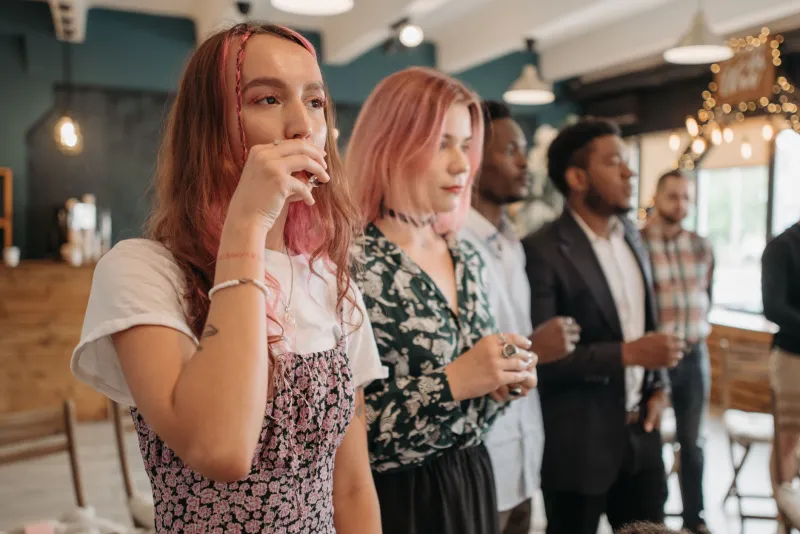
Here's something nobody tells you when you're starting out: your audience already exists. They're not waiting to be created. They're not going to materialize once you hit some follower threshold or land a press mention. They're out there right now, talking in subreddits and Discord servers and Facebook groups, watching things that kind of scratch the itch — but not quite. They're waiting for you to show up, and they don't even know your name yet.
The trap most emerging entertainers fall into is building content first and then going looking for an audience to receive it. That's backwards. The creators who build something real — something that actually sticks — tend to do it the other way around.
Forget the Funnel. Think Like an Anthropologist.
The standard advice is to "find your niche." And sure, fine, that's technically accurate. But the framing is all wrong. A niche sounds like a corner you back yourself into. What you're actually looking for is a community — a group of people with a shared frustration, obsession, or identity that isn't being fully served by what already exists.
Think about how comedian Nate Bargatze built his following. He wasn't chasing the mainstream comedy circuit demographic. He was speaking directly to a specific flavor of Southern, family-friendly, self-deprecating humor that a huge swath of America felt completely unseen by in the late 2010s comedy landscape. He didn't invent that audience. He found them. The algorithm eventually caught up, but by then, the relationship was already real.
The practical version of this looks less like a marketing spreadsheet and more like genuine field research. Where do the people who would love your work already hang out? What are they complaining about? What do they say they can't find? That's your map.
Go Where the Algorithms Aren't Paying Attention
Here's a counterintuitive move: stop spending all your time on the platforms that everyone else is fighting over. The attention economy on Instagram, TikTok, and YouTube is insanely competitive, and the algorithmic feedback loop punishes experimentation. You can't learn much about your real audience when every decision is filtered through whether it gets engagement in the first 48 hours.
Some of the most loyal fan communities in entertainment were cultivated in spaces that felt almost embarrassingly small at the time. Podcasters who built devoted audiences through niche email newsletters. Musicians who developed cult followings by being genuinely active in genre-specific message boards. Comedians who showed up repeatedly to the same weird little open mics in specific cities until they owned those rooms.
The logic here isn't that you should avoid big platforms. It's that you should do your learning somewhere the stakes are lower and the signal is cleaner. A hundred people who found you in a specific Slack community for documentary film nerds will tell you more about who your audience actually is than ten thousand algorithm-served impressions.
Map the Psychology, Not the Demographics
Age, gender, location — these are the metrics that ad buyers care about. They're not particularly useful for understanding who your real people are.
What actually matters is psychology: What does your audience believe that most people don't? What do they feel misunderstood about? What are they secretly tired of seeing done badly? When you can answer those questions, you stop making content for a demographic and start making it for a worldview — and that's when the connection gets real.
A useful exercise is to write out, in plain language, the unspoken frustration your work addresses. Not the subject matter, but the feeling. "I make travel content" is a category. "I make content for people who are tired of aspirational travel culture making them feel like they're doing it wrong" is a psychology. One of those will help you find your people. The other one won't.
Small Is Not a Problem. Diffuse Is.
A common mistake is treating a small audience as something to fix. It's not. Small and specific is actually an incredibly powerful place to build from. The issue isn't size — it's diffuseness. An audience of 500 people who are all deeply connected to exactly what you're doing is worth more, professionally and creatively, than 50,000 people who vaguely liked one thing you posted.
The entertainment industry has slowly started to recognize this. Streaming platforms greenlight projects based on passionate niche audiences all the time now. Record labels are paying attention to artists who've built real communities in specific genres, even when the numbers look modest by mainstream standards. A tight, engaged, specific audience signals something that raw follower counts don't: intentionality.
So when you're in the early stages and the numbers feel discouraging, ask yourself a different question. Not "how do I get more people to see this?" but "are the people who are seeing this exactly the right people?" If the answer is yes, you're further along than you think.
The Algorithm Will Eventually Catch Up
Here's the thing about doing this work first — when you've genuinely mapped your audience's psychology and built something that speaks directly to them, the algorithmic platforms eventually start to notice. Engagement rates go up. Watch time improves. Shares happen organically. The platforms reward you not because you cracked some code, but because you built something real enough that people actually responded to it.
That's the sequence that works. Real connection first, algorithmic amplification second. Not the other way around.
Your people are out there. They're already talking about the thing you want to make. The work isn't manufacturing an audience — it's listening carefully enough to find the ones who were always going to be yours.