Hide in Plain Sight: Why the Smartest Creators Are Making Themselves Harder to Reach
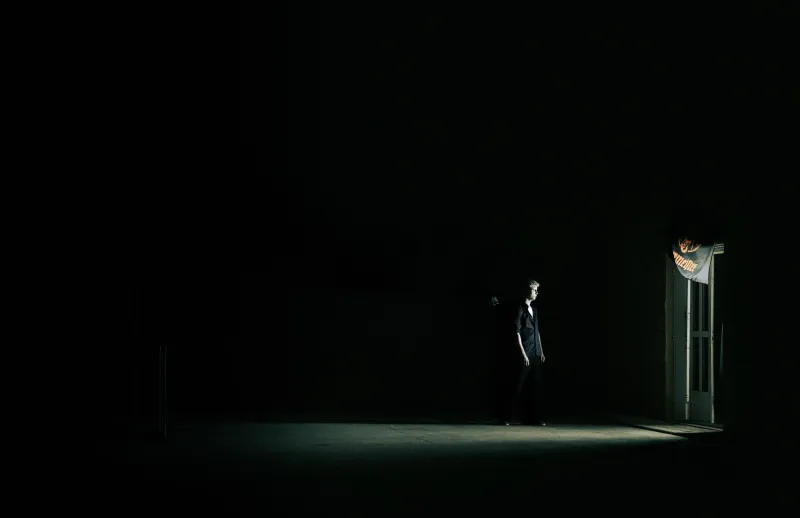
Somewhere along the way, the entertainment industry swallowed a lie whole: that visibility equals value. That the more you show up — on Instagram, on podcasts, in comment sections, on TikTok at 11pm — the more relevant you become. The more money flows. The more doors open.
Except that's not really how it works anymore, is it?
The attention economy has maxed out its credit card. There are more creators, more platforms, more content formats, and more noise than at any point in human history. And paradoxically, the people cutting through that noise aren't the ones yelling the loudest. They're the ones who've figured out how to make their absence feel like an event.
The Scarcity Principle Didn't Go Anywhere
Human psychology hasn't changed just because the internet did. We've always assigned higher value to things that are hard to get. Limited edition sneakers. Reservations at restaurants with three-month waitlists. Albums dropped without warning from artists who've been quiet for two years.
The scarcity principle is ancient. What's new is that a generation of creators has been trained to do the opposite — to flood every available channel with content, to stay "top of mind," to never let the audience forget you exist. That strategy made sense in 2015. In 2024, it's the creative equivalent of screaming in a hurricane.
When you're everywhere, you become background noise. When you're selective, you become an occasion.
Think about how Beyoncé operates. Or how certain directors — your Kubricks, your Finchers — build mystique by being genuinely hard to access. The cultural weight of their work isn't diminished by their silence. It's amplified by it. Every appearance, every statement, every release lands with more gravitational pull because you weren't drowning in their daily content loop.
What Strategic Obscurity Actually Looks Like
Let's be clear about something: strategic obscurity isn't the same as disappearing. It's not burning your social media accounts and moving to a cabin in Montana (though honestly, no judgment there). It's a deliberate, intentional calibration of your presence.
In practice, it might look like this:
Choosing depth over breadth. Instead of maintaining five platforms at a mediocre level, you go deep on one or two and let the others quietly fade. Your audience knows where to find you, and when you show up, it means something.
Letting demand build before you supply. This runs counter to every piece of creator advice you've ever read, but sitting on finished work — letting anticipation gather — is a legitimate strategy. The release becomes a moment rather than just another piece of content in a feed.
Being selectively unavailable. Not responding to every opportunity. Not accepting every interview. Not showing up to every panel or podcast that asks. Saying no, a lot, so that your yes carries actual weight.
Protecting your process from public consumption. The "behind the scenes" content trend has made everything feel transparent and accessible — which sounds good until you realize it also makes everything feel disposable. Keeping some of your creative process private preserves the magic. People don't need to watch the sausage get made to appreciate the meal.
The Audience Loyalty Angle
Here's the thing that gets undersold in conversations about creator strategy: the audiences built around scarce, selective creators tend to be dramatically more loyal than the mass followings accumulated through constant output.
When someone follows a creator who shows up everywhere, every day, the relationship is casual. It's background. But when someone discovers a creator who's intentionally hard to pin down — whose work requires a little seeking, whose presence feels earned — the relationship becomes something closer to devotion.
Think about the difference between a band you stumbled across on Spotify's algorithmic playlist versus a band a friend drove you an hour to see at a small venue. The investment changes the relationship. The scarcity of the experience made it mean more.
Creators who operate with strategic obscurity are essentially manufacturing that second kind of experience, even in a digital context.
The Competitive Advantage Nobody's Talking About
From a pure career strategy standpoint, there's another layer here that entertainment professionals should be paying attention to: in an oversaturated market, being genuinely hard to categorize and hard to access creates a different kind of brand equity.
Industry gatekeepers — labels, studios, agencies, production companies — are also drowning in pitches, reels, and DMs. A creator who has cultivated genuine mystique, who has an audience that came looking for them rather than stumbling across them algorithmically, walks into those rooms differently. The narrative writes itself: this person doesn't need to be everywhere, because their audience finds them anyway.
That's a different conversation than "I have 200,000 followers and a 4% engagement rate."
So How Do You Actually Pull This Off?
Starting from scratch is easier than transitioning from a high-output strategy, but neither is impossible. A few things worth considering:
First, audit your presence honestly. Where are you showing up that isn't actually serving your creative goals? What platforms are you maintaining out of anxiety rather than strategy? Cutting those loose isn't failure — it's editing.
Second, raise the bar on what you share publicly. Not everything needs an audience. The instinct to document and publish everything is a trained behavior, not a natural law. Fight it.
Third, get comfortable with the discomfort of silence. The algorithm will punish you for it in the short term. Engagement will dip. The dopamine hit of constant feedback will disappear. That's the cost of entry for this strategy, and it's real. But the creators who can sit in that discomfort long enough tend to come out the other side with something more durable than a following — they come out with a reputation.
And in entertainment, reputation is the long game.
The attention economy is broken. The feed is infinite and the audience's patience is not. The creators who figure out how to make their presence feel like a privilege rather than a given — those are the ones who are going to matter in five years.
Being everywhere is easy. Being somewhere worth finding is the actual work.