Nobody's Asking for Your Permission Anymore: The New Power Structure in Entertainment
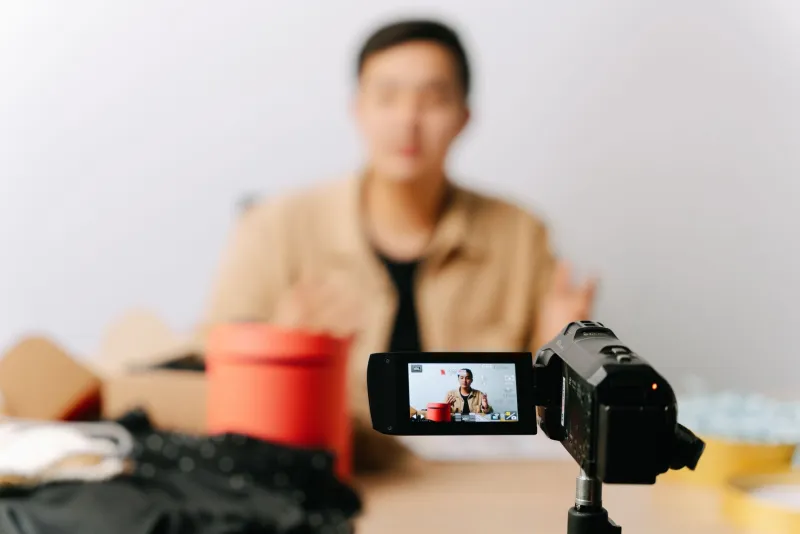
For most of the 20th century, breaking into entertainment meant convincing someone with power that you deserved a seat at the table. A record label A&R rep. A network programming executive. A Hollywood studio development team. These people weren't just decision-makers — they were filters. They controlled what got made, who got heard, and ultimately what the rest of us experienced as culture.
That world still exists, technically. But it's operating on borrowed time, and the new power players in this industry aren't asking for a meeting. They're already working.
The Old System Wasn't Built for You
Let's be honest about what the traditional gatekeeper structure actually was: a bottleneck designed to manage risk for large institutions. Studios, labels, and networks weren't in the business of discovering talent for the sake of art. They were protecting investment. The gatekeepers existed to make sure money didn't go to the wrong people — meaning anyone unproven, unconventional, or simply unlucky enough to not have the right connections.
That model worked when distribution was scarce. If you wanted your film seen, you needed a distributor. If you wanted your music played, you needed radio. If you wanted your show made, you needed a network to foot the bill. The infrastructure was so expensive and so centralized that creators had no choice but to play by someone else's rules.
Then the infrastructure got cheap. And then it got free. And then it got social.
What Changed and Why It's Not Going Back
The shift didn't happen overnight, but it accelerated in ways nobody fully anticipated. YouTube launched in 2005. Spotify changed music distribution in 2008. Substack handed writers a direct line to paying readers. TikTok rewired how an entire generation discovers content, bypassing traditional press, radio, and even algorithmic curation on older platforms.
What these tools share is radical disintermediation — cutting out the middle layer between creator and audience. And when you remove that middle layer, you also remove the gatekeeper sitting inside it.
MrBeast didn't need a network to greenlight his ideas. He built an audience of hundreds of millions on his own terms, and now he's producing content at a scale that rivals traditional studios. Rihanna didn't wait for the beauty industry to invite her in — she launched Fenty Beauty and became one of the most successful cosmetics entrepreneurs in American history. Podcasters like Joe Rogan and Alex Cooper negotiated nine-figure deals with Spotify not because a legacy media company discovered them, but because they already had the audience and the leverage.
These aren't flukes. They're the new template.
The Skills That Actually Matter Now
Here's where things get interesting for anyone trying to build a career in entertainment right now. The old model rewarded patience, proximity, and pedigree. You waited for your shot. You lived in LA or New York. You went to the right school or interned at the right agency. You networked until someone decided to take a chance on you.
The new model rewards a completely different set of instincts.
Audience development is the skill nobody talks about enough. Understanding why people follow someone, what keeps them coming back, and how to grow a community around a creative identity — that's the foundational competency of the modern entertainment professional. It used to be the job of a marketing department. Now it's the job of the creator themselves.
Consistency beats perfection in this environment. The creators who are winning long-term aren't necessarily the most talented in a room — they're the ones who show up reliably, iterate quickly, and build trust with their audience over time. The entertainment industry used to manufacture stars through scarcity and mystique. The new version builds them through volume and genuine connection.
Adaptability across formats is also non-negotiable. The creators building real careers right now aren't just good at one thing. They're writing, speaking, filming, editing, distributing, and monetizing across multiple platforms simultaneously. The generalist creator — someone who can move fluidly between a podcast, a newsletter, a short-form video, and a live event — has more career resilience than the specialist who mastered one lane.
What This Means If You're Trying to Break In
If you're early in your entertainment career or thinking about making a move, the most important mindset shift is this: stop trying to get discovered and start building something worth discovering.
That sounds obvious, but the old model conditioned an entire generation to think in terms of auditions, submissions, and pitches. You made your work, then you handed it to someone else to decide if it mattered. That mental framework is a trap now, because the people who can say yes or no to your career are increasingly your audience — not an executive in a corner office.
That doesn't mean traditional industry relationships are worthless. Deals still happen. Studios still exist. Labels still sign artists. But the leverage in those conversations has shifted dramatically toward creators who come in with an existing audience and a proven concept. The pitch that used to require years of industry access now just requires demonstrated traction.
And traction, unlike a Rolodex, is something you can actually build yourself.
The Honest Tradeoff
None of this is a utopian story. The collapse of gatekeepers also means the collapse of certain protections and resources they provided. Development deals funded creative risks. Label advances paid for production quality. Studio infrastructure supported projects that would never survive on audience metrics alone.
The new system is more democratic in who gets to participate, but it's also more brutal in how quickly it rewards and punishes. Algorithms shift. Platforms rise and collapse. The audience's attention is finite and fiercely contested. Building a career outside the old system requires a level of entrepreneurial grit that a lot of genuinely talented people weren't trained for and don't necessarily want.
But here's the thing: the tradeoffs are yours to make now. That's the actual change. Not that the industry got easier — it didn't. It's that you get to decide which game you're playing. And for a lot of creators, that's the only permission they ever needed.