Your People Are Out There — They're Just Not Where the Algorithm Is Looking
Somewhere right now, there's a creator making genuinely weird, specific, uncommercial work — and they have ten thousand people who would follow them anywhere. Not ten million. Ten thousand. And those ten thousand people are buying the merch, showing up to the live events, recommending the work to friends, and funding the next project before it's even announced.
That's not a consolation prize. That's a career.
The Viral Dream and Its Discontents
We've spent the better part of a decade treating algorithmic visibility as the primary goal of creative work. Get discovered. Go viral. Hit the trending page. The logic made a certain kind of sense when platforms were still growing and organic reach was actually possible. But the math has shifted dramatically, and most creators haven't fully updated their thinking to match.
Algorithms now optimize for retention signals that tend to reward the broadest possible appeal — which is another way of saying they reward the most average version of any given idea. The content that travels furthest is often the content that offends the fewest people, challenges the fewest assumptions, and requires the least investment from the viewer.
If your work is genuinely specific — if it's made for a particular kind of person with a particular set of interests and references — the algorithm is not your friend. It's not designed to find your audience. It's designed to find the largest possible audience for whatever it's currently rewarding.
Those are very different things.
What Niche Actually Means
The word "niche" gets thrown around a lot, and it's worth being precise about what it actually means in practice. A niche isn't just a genre or a topic. It's a specific intersection of interests, aesthetics, values, and sensibilities that describes a real group of people who currently feel underserved by what's available to them.
The creator who figures out that intersection — and makes work that speaks directly to it — doesn't need to convince a casual viewer to stick around. They're already talking to someone who was looking for exactly this. That changes the entire dynamic of the creator-audience relationship. You're not trying to hold someone's attention. You're giving something to someone who was already paying attention.
That shift has practical consequences. Niche audiences convert at higher rates, retain longer, and evangelize more aggressively than broad audiences do. They're not passive consumers — they're participants in something they feel genuinely connected to.
Finding Your People Without Waiting to Be Found
So if the algorithm isn't going to deliver your audience to you, how do you actually find them? This is where a lot of creators get stuck, because the discovery methods that work for niche audiences look nothing like traditional marketing.
Start with the communities that already exist around the intersection of interests your work lives in. These aren't always the obvious ones. If you're making a podcast about the business side of independent film, your audience might be lurking in screenwriting forums, film festival Facebook groups, and the comment sections of entertainment trade publications — not in general podcast directories. Go there. Participate genuinely. Don't lead with promotion.
Collaboration with other niche creators is one of the most underrated tools available right now. When two creators with overlapping but non-identical audiences work together, the audience crossover is almost always more loyal than anything you'd pick up from a viral moment. These are people who found you through someone they already trusted. That's a fundamentally different kind of introduction.
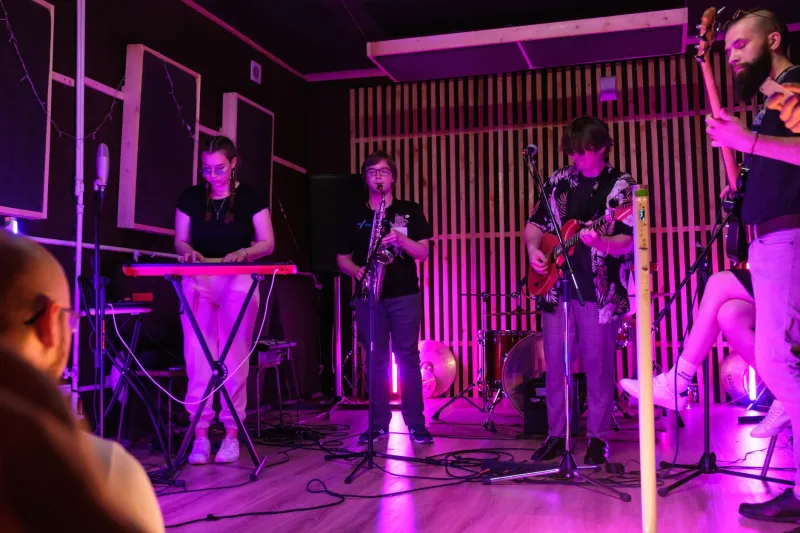
Live events — even small ones — do something that digital content simply cannot. They create shared experiences that deepen the sense of community among your audience. A fifty-person live show in a bar, a virtual watch party, a small workshop: these things build the kind of loyalty that sustains careers through the inevitable slow periods.
The Economics of Small and Devoted
Here's the number that tends to reframe things for creators who've been chasing scale: a thousand true fans, each spending a hundred dollars a year on your work, is a six-figure income. That's not a theoretical framework — it's a math problem with a real solution.
The creator economy has developed enough infrastructure around this model that it's genuinely viable in ways it wasn't five years ago. Subscription platforms, direct-to-fan sales, limited-run merchandise, exclusive content tiers — the tools exist to monetize a small, devoted audience without needing a massive platform deal or a viral moment to unlock them.
The trade-off is that this model requires a different relationship with your audience than mass-market content does. You have to actually know who they are. You have to make them feel seen in ways that generic content can't. That's more work in some respects — but it's also more creatively satisfying than optimizing for the broadest possible appeal.
Specificity Is the New Scale
The fragmentation of media that everyone spent years lamenting turns out to be an opportunity in disguise. When there were three TV networks and a handful of major studios controlling what got made and distributed, there was no room for the genuinely weird and specific. Now there's more room than anyone knows what to do with.
The creators who are building durable careers right now aren't necessarily the ones with the biggest numbers. They're the ones who found their specific people and made something those people couldn't get anywhere else. That's the job. And it starts with accepting that the algorithm was never going to do it for you.